

Bringing home a rescue dog is exciting. For your new dog, almost everything may be unfamiliar. Start with a quiet place to rest, a predictable routine, and time to get to know you. These guides are for both foster and adoptive families.
First days · Training and routines · Overseas arrivals · Food changes
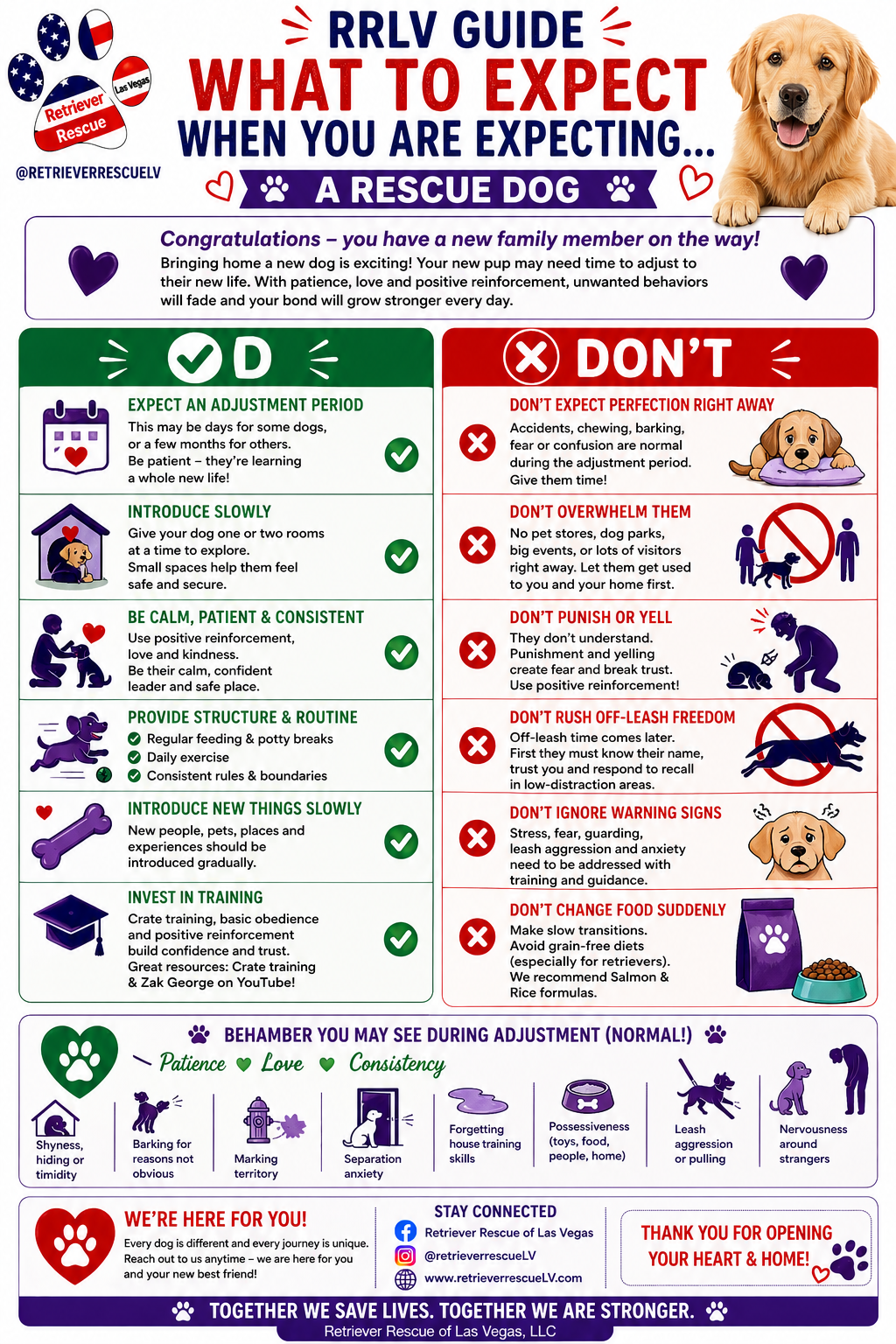
The first few days
Give your dog a quiet area of their own. Let them approach you instead of reaching for or hugging them. Start with regular potty breaks and reward them for going outside. Keep outings short and low-key at first. Always supervise children with dogs and give both a way to take a break.
Keep food, toys, and resting areas separate from other pets at first. Ask your rescue coordinator for help planning introductions, especially if either dog is fearful or guards food or toys. Take the pressure off if either dog seems tense.
View the What to Expect handout
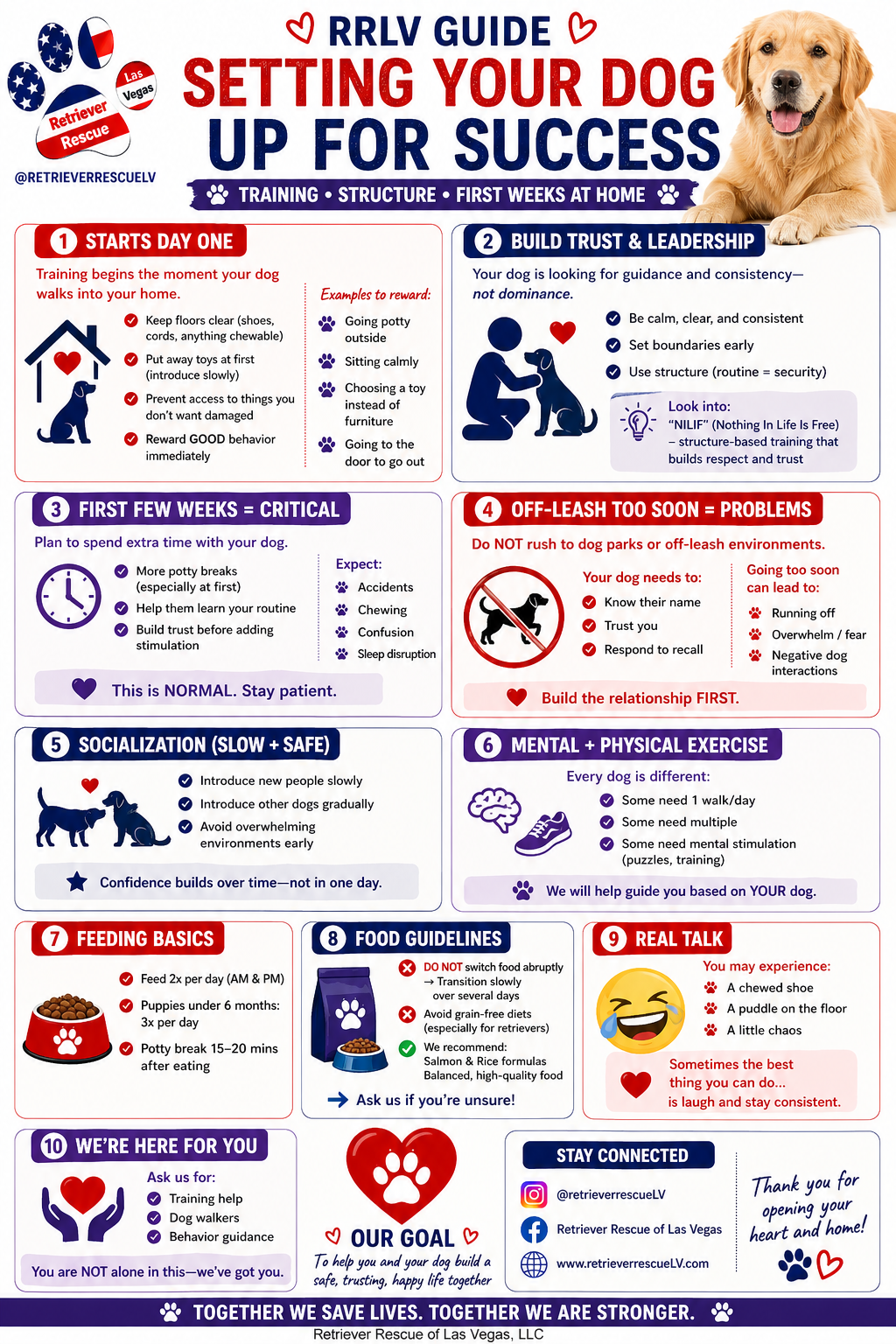
Set your dog up for success
Put away things you don’t want chewed, reward the behavior you want to see, and keep meals, potty breaks, and bedtime predictable. Introduce people, places, and other dogs gradually. If you see regular growling or guarding, severe anxiety, or a bite, separate safely and contact your veterinarian and rescue coordinator rather than waiting for it to pass.
See the American Veterinary Society of Animal Behavior’s guidance on reward-based training.
View the Setting Your Dog Up for Success handout
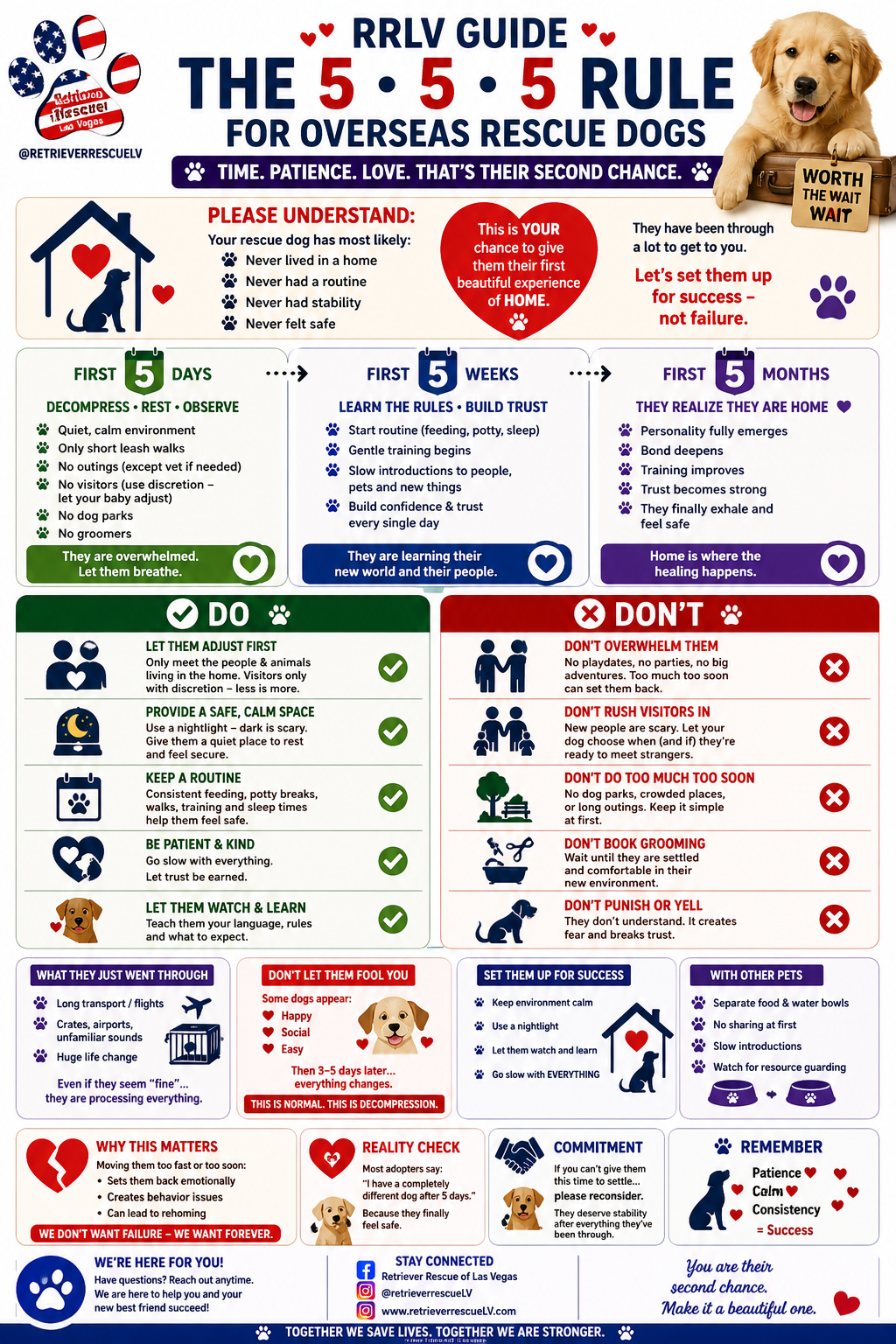
For dogs arriving from overseas
Travel is a big change. Our 5-5-5 guide looks at the first days, weeks, and months after arrival. Use it as a reminder to go slowly, not as a deadline. Some dogs need longer to settle than others.
View the 5-5-5 Guide handout
Food and feeding changes
Ask your rescue coordinator what your dog has been eating. Check with your veterinarian before changing a prescribed diet or choosing a diet for suspected allergies. If your vet advises changing food, ask how to make the transition gradually. For everyday meals, choose food labeled complete and balanced for your dog’s life stage, or ask your vet for a properly formulated home-cooked diet.
See the FDA’s guide to complete and balanced pet food.
Need a hand?
Contact your RRLV coordinator with questions, or see our Las Vegas resources and veterinary partners.